Wednesday, November 20, 2013

AUTHOR INTERVIEW: Robert Walker

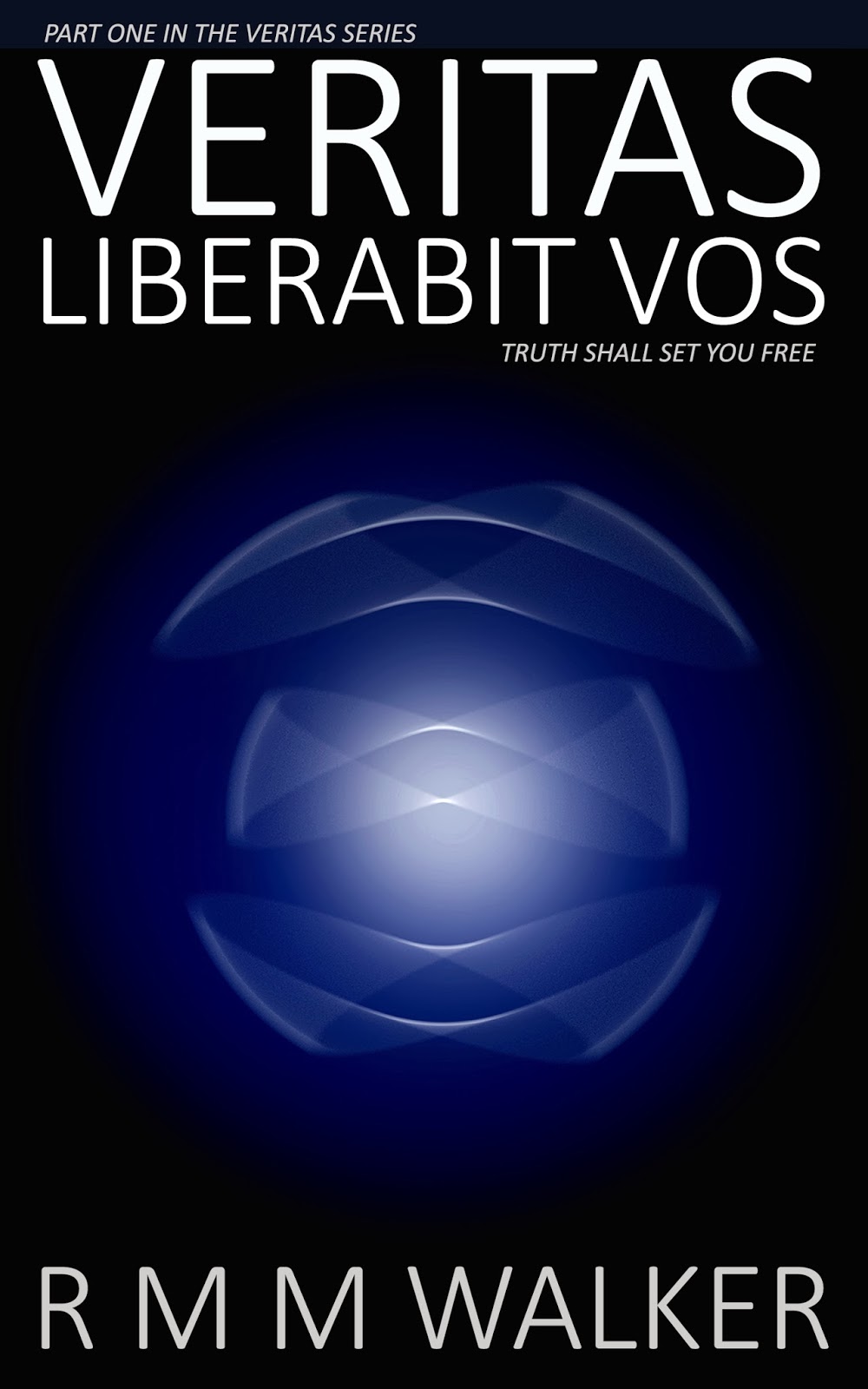
An interview with Robert Walker, author of the contemporary science fiction novel, Veritas Liberabit Vos.


Hi! Welcome to Zigzag Timeline. Can you tell us about your background as an author? What got you into writing?

When I was nine I wrote a short story and send it off to Penguin.  I received a letter back;  whilst they were impressed and enjoyed reading it, unfortunately, they weren’t able to take it on.  I didn’t pursue my writing other than during education and was generally more obsessed with computing and technology. Thirty years later, some changes have led me back to that root and I went full steam into it seeing no barriers to entry with the ability to self-publish.

What was the inspiration behind "Veritas Liberabit Vos"?

My inspiration came from keeping an open mind about ideas, our perceptions of reality, alternate possibilities and a yearning to investigate the unknown.

What are you hoping readers get out of reading your book?

I would hope there are many positives about my writing and the story, so that there will be at least something that different people will be pleased to have read.  Ultimately, I hope the style and mix of content that builds as events unfold, will provide an entertaining, eye opening and thought provoking journey.

Among your characters, who's your favorite? Could you please describe him/her?

I’m afraid on this one, I have to take the Buddhist creed of no attachment; I have to not care, any of them could be taken away.  We are only seeing glimpses into the various personalities as we are introduced to many characters at the start.  This puts some element of choice on the readers part, to explore their own imagination and ideas around a character they feel some affinity towards perhaps. 

What's your favorite scene from your novel? Could you please describe it?

It’s probably the event that serves as the catalyst to everything beyond that point, and what it means for everyone involved.  Over twenty people are on a Skydive for charity, when the plane loses power and they are forced to bail out.  There are some inexperienced divers, so much panic ensues in freefall.  As they begin to stabilise and take control of the situation, huge shimmering blue rings descend from above and pass through them as they hurtle towards Earth.  The discs hit the fields below and as divers come closer to the ground, they can see that strange patterns have been formed.  They learn that the patterns are actually binary code, and we have a reply to a message Carl Sagan and his colleagues had sent into space via the Arecibo Radio Telescope almost forty years ago.  They also know for sure, that it was not made by a few locals with planks and rope...

What's your favorite part of writing? Plotting? Describing scenes? Dialogue?

Developing the ideas, interlinking them, building on them and fusing them.

What’s the most challenging aspect of writing, in your opinion?

Assembling enough in my mind and my planning outlines to just be able to let it just flow out. 

How long does it take you to write a book? Do you have a writing process, or do you wing it?

Once I’ve started, it averages out at around a couple of thousand words per day.

Did you ever surprise yourself when you were writing your book? Characters who took on lives of their own? Plot elements that took unexpected turns?

The way in which many things unfolded was rather shocking and sometimes quite delightful.


What do you think of the indie publishing revolution?

I think it’s really cool that anyone can just go right ahead and do it themselves.  In all honesty, I don’t know much about it, I’ve just jumped in headfirst and am somewhat overwhelmed by its vastness. 

Links:

Website/blog: www.veritasliberabitvos.com

Parts One & Two of the new book, “Veritas Liberabite Vos” (Truth Shall Set You Free) are out now:

Part One is available for FREE from Smashwords.
Part Two is a pay want you want (and also includes Part One).
Or download from Amazon: Part One is $0.99; Parts One & Two $2.99.

Tuesday, November 19, 2013

AUTHOR INTERVIEW: Shawn Mihalik

An interview with Shawn Mihalik, author of the novel Brand-Changing Day, recently released by Asymmetrical Press.


Hi! Welcome to Zigzag Timeline. Can you tell us about your background as an author? What got you into writing?

I’d wanted to be a writer for about as long as I can remember. I took a stab at writing 10-page “novels” when I was like twelve. But I didn’t start writing with the goal of making a career out of it until high school, when I wrote for, and later became the editor of, the school’s newspaper.

I won a small handful of awards for some of my work on the paper, and so I decided that journalism was going to be my focus. I majored in journalism at Youngstown State University, but left after two semesters. My desire to write remained, though, and after a couple years I started writing fiction seriously, leading to the publication of my first book, a novella called The Flute Player, and now of course, Brand-Changing Day

What was the inspiration behind "Brand-Changing Day"?

I’ve worked in a lot of restaurants, but working in restaurants was never what I wanted to be doing at any given point in my life. So when I decided to write my first novel, not only did a book about a fictional restaurant seem the natural choice because I new the setting intimately, but also because it felt like a way for me to adequately express the internal frustrations I’d felt about being stuck in the restaurant industry for so long, something I hadn’t until that point been able to make any non-restaurant-workers understand.

What are you hoping readers get out of reading your book?

I have to admit that on some level I have a desire to be this Sinclairian author, with my book impacting the chain restaurant industry the same way The Jungle did the meatpacking industry. But really, I just want people who read Brand-Changing Day to realize that they needn’t be stuck in any sort of self-repeating cycle with their life, that where they are now doesn’t have to be where they are in the future if they don’t want it to be.

Among your characters, who's your favorite? Could you please describe him/her?

There’s a talking bear in the novel (he’s on the cover actually), and while I won’t reveal too much about him or what exactly his deal is (he’s too important to the plot), I will say that he was a blast to write.

What's your favorite scene from your novel? Could you please describe it?

I have two favorite scenes. One is rather early in the novel, and it’s a subtle parody of the orientation videos that are shown to new employees at pretty much any company. The other, and, again, I won’t give too much away here, involves a character having a set of epiphanies about himself and the direction his life is taking, but the epiphanies are realized within the context of Doctor Who, which the character has been recently introduced to by another character.


What's your favorite part of writing? Plotting? Describing scenes? Dialogue?

Drinking. Seriously, though, what is my favorite part of writing one day can easily become the part of the process I hate most the next.

What’s the most challenging aspect of writing, in your opinion?

Similar to my answer above, that’s hard to say. It’s not so much that any part of the process is consistently challenging, but that any and every part can be very hard on any given day. Some days I love writing, and some days I hate it. More often than not I love it, though.

How long does it take you to write a book? Do you have a writing process, or do you wing it?

Well, I haven’t written enough books yet to answer that consistently. My novella is only ninety pages and took me five years to get write. Brand-Changing Day is more than twice as long and took me a year. I may or may not be working on something now that will probably be three times as long as Brand-Changing Day and who knows how long it will take me. As for my process, I write every day, except when I don’t.

Did you ever surprise yourself when you were writing your book? Characters who took on lives of their own? Plot elements that took unexpected turns?

I’m not one of these writers who think that characters can write themselves or that the author has no real control over what happens in a book. Which isn’t to say that I outline my books, either. But I do plot my books and short stories in my head, and I typically know how it’s going to end way before I get to that ending (in fact, Brand-Changing Day’s final scene was one of the first parts of the book that I wrote). That said, I have surprised myself with how attached I get to some of the characters. There’s a scene in Brand-Changing Day that I knew almost from the beginning was going to happen, but when I finally wrote it, I found myself growing very sad.

What do you think of the indie publishing revolution?

It’s wonderful—I wouldn’t be here without it. And yet at the same time, it’s completely unpredictable. I think some amazing things are going to happen in the publishing industry over the next few years, even more amazing than the things that already have happened. And while I don’t know what they are, I plan to be a part of them.

Links:

shawnmihalik.com (author website)
asymmetrical.co (publisher's website)
http://twitter.com/shawnmihalik (author's Twitter)

Friday, November 15, 2013

Glass House StoryTime Triple Cover Reveal!


Big news! Glass House Press will be releasing several novellas in the spring as part of the Glass House StoryTime series, and today, three of the covers are unveiled: Fallen Souls by Linda Foster, Broken Stone by P.T. McHugh, and The Firedragon by yours truly. Check 'em out!


Almost a hundred years ago, the Enchanters defeated the Lord of the Underworld in one of the most fearsome wars the world had ever seen. The public thinks that this victory means the people are safe. But they’re wrong. The supernatural beasts the Lord unleashed remain on the earth, multiplying and ravaging what’s left of civilization. As long as these monsters exist, mankind will be in danger. And though the government, ruled by the magic-wielding Enchanters, seeks to protect their people, they are too few in number. They need the Defenders – a special class of non-magical humans – to fight the monsters. The Defenders are an elite force, and mankind’s only hope against the horrors that live beyond their gates. 

 Fourteen-year-old Aurelia “the Firedragon” Sun has been training since she could walk to become a Defender, and her extraordinary combat skills have earned the attention of the powerful government. In fact, she’s been tapped to represent her nation in an international monster-fighting competition, which pits champions from across the globe against creatures of the Underworld in a violent spectacle. If she wins, she will become a full-fledged member of the Defender force. 

 But as Aurelia moves deeper into the competition, she realizes that all is not as it appears. There’s something sinister behind the competition, something that could change the way she sees everything … and the Enchanters, it seems, are not the heroes she thought. Aurelia begins to ask questions. But before she can discover the truth, she is pitted against the most dangerous monster in the competition – one that will take her life if it can.

About Mary Fan
Mary Fan is a hopeless dreamer, whose mind insists on spinning tales of “what if.” As a music major in college, she told those stories through compositions. Now she tells them through books—a habit she began as soon as she could pick up a pencil. Flynn Nightsider and the Edge of Evil follows a well-received debut novel, a space opera titled Artificial Absolutes (2013), and is the first in the Flynn Nightsider series. Mary would like to think that there are many other novels in her bag, and hopes to prove that to the world as well. Mary lives in New Jersey and has a B.A. from Princeton University. When she’s not scheming to create new worlds, she enjoys kickboxing, opera singing, and blogging about everything having to do with books.


Ash never thought going to a party could be dangerous. He certainly never thought it would change his life. But when a man with red eyes begins following him – and his sister – he realizes he was wrong. Soon they’re running, leading the man on a desperate chase over icy roads.
When Ash crashes his car, nearly killing his sister, the red-eyed man offers Ash a choice – save his sister, but pay the highest price possible. Bring Grace back to life, at the cost of his own soul.
Suddenly, Ash is facing a choice he never sought. But will he use that choice to save his sister? And if he does … what will it mean for Ash himself?

***


Someone has started a revolution in Heaven, his betrayal and lies tearing the fabric of the angels apart. Things are coming quickly to a head, and before long the angels will find themselves at war … with each other. Friends and allies will turn against each other, each choosing their own side of right and wrong.
If that happens, the world as they know it will end.
It's up to Kali, protector of angels and humans, to stop the treachery before war breaks out and peace is shattered forever. But how far is she willing to go to save the lives of the angels? Will she turn against her own dearest friend to save her world?
And if she does … will anything be left for her to come home to?

***

Join Ash and Kali on their individual adventures as we see what – and who – led them to find each other in Soul Bound, the first book in the Realm of the Claimed.


Reis Slayton is a man without a home, family, or direction until the US military comes along. But the moment he joins, his ‘talents’ come to the attention of those higher than him – he has a sharp eye, and a willingness to shoot first and ask questions later. His deadly skills are finely tuned … and used.

But this isn’t what Reis wanted to be. Years later, after too many undercover operations, and countless lives taken, he finds himself questioning his direction. Does he believe in the government? Does he agree with his assignments? Or is he wasting his life – and conscience – on someone else’s goal?

With that thought in mind, Reis takes a leap and interviews for a new company, where he’s given the role of body guard. Against his better judgment, he takes a job that no one else wants – guarding the daughter of a wealthy family – and grudgingly moves into a new life. Soon after taking a job, he realizes that he might have found the one thing he’s never had: a family, and someone to fight for. He grows to love his new charge, and begins to feel fulfilled for the first time in his life.

But no matter how hard people try, they cannot escape the sins of their past. Will Reis be able to leave the life of an assassin behind him, and protect his new charge? Or will his history come back to haunt him, in the worst ways imaginable? 


a Rafflecopter giveaway Hop over to the other blogs


You are next... Click here to enter
This list will close in 7 days, 11 hrs, 12 min (11/21/2013 11:59 PM North America - Pacific Standard Time)

Thursday, November 7, 2013

NaNoWriMo... What is it good for?

I happened to finish the first draft of Artificial Absolutes in the fall of 2011, and when I began bugging friends of mine to beta read it around December, one of the first questions I got was, "Did you write this for NaNoWriMo?" My answer: "Huh?"

As just about everyone engaged in the writing community knows, National Novel Writing Month takes place in November and is basically a story-writing marathon. The goal: to write 50,000 words in one month. Which is a bit short for a novel, of course, but not too far off (the average length of a novel is approximately 65,000 words). And of course, no one expects your hastily banged out draft to be publisher-worthy... I hope.

I've never participated in NaNo myself. I signed up for an account last year with the intention of writing Artificial Absolutes' sequel, Synthetic Illusions, which I had started a year before but been stuck on ever since. But at the time, Artificial was still in edits with Red Adept Publishing, and I ended up doing zero, zip, zilch on Synthetic because I was too busy whipping Artificial into shape. Even though I knew I had a perfectly valid excuse for not participating, it wasn't easy seeing all the triumphant word counts being posted on everyone's Facebook feeds. "I wrote 6,245 words today!" "23,623 word so far!" "2,623 words in one hour!" Meanwhile, poor Synthetic was sitting on my desktop as a half-formed outline, and guilt over neglecting it kept gnawing at me. Even though I had some time between editing rounds to work on Synthetic -- a few days here or there -- and could have met my goal if I really wanted to, I was just so fried that the very thought of creating anything new made me weary.

So then, the resentments began to pile up. What's the point of NaNoWriMo, anyway? Who writes a novel in a month, especially when you have a day job? Why must everyone brag about their word counts and make those of us who can't keep up feel bad? Is NaNoWriMo the cause of so much of the unedited self-published gunk floating in the sewer of Amazon's Kindle Store -- people banging out books in a rush and throwing them out to the world without stopping to think about whether their works are actually reader-worthy? Etc., etc., grumble, grumble.

I still have my suspicions about that last bit when I wade through the online slush pile that is Amazon, but I also eventually came to realize why NaNoWriMo is so popular. People like communities, and it must be nice knowing that you're not the only one slogging through the torturous birth of a first draft. People who have a book idea in them but never settled down to put it into words finally have encouragement and motivation to do so.

Okay, so I can see the point. But of course, when NaNo came around this year, I found myself in the middle of edits again, this time for Synthetic (which I cranked out in a six-week frenzy of sleepless nights). No resentments, though. People all have their own preferences and measures of success. If word count's what counts, good for you. I think NaNo's just not for me... although the competitive brat in me wishes she could boast of 10,000 word writing days.

Ah well. I will just have to content myself by looking back at all I've done this year -- wrote, rewrote, submitted, got contracted for, and edited Synthetic Illusions (103,000 words), knocked out a first draft of Butterfly Dome (101,000 words), then revised, rewrote, and expanded Flynn Nightsider and the Edge of Evil from the little 67,000 word skeleton I submitted to Glass House Press into a 181,000 word monstrosity (that will likely need trimming in the next round of edits).

All right. Now, the brat is satisfied...

Monday, November 4, 2013

AUTHOR INTERVIEW: Tori Ridgewood


An interview with Tori Ridgewood, author of the paranormal romance Wind and Shadow, published by Melange Books.


Hi Tori! Welcome to Zigzag Timeline. Can you tell us about your background as an author? What got you into writing?

I’ve always been an avid reader and a storyteller. When it came to telling tales from my own imagination, all I needed was an audience, even if it was only myself. For example, when I was eleven, I had to be told to stop talking during a ski lesson, as my stories were holding up the instructor. And when I was a teenager, I often entertained myself on my newspaper route and walks to school by quietly narrating romances and ghost stories to myself, complete with dialogue. I was thrilled any time something I’d written made it into print -- poetry chosen for a school anthology, or articles written for the student section of the local newspaper -- and created my own storybooks for pleasure. I found a reflection recently that I’d written at at 13 in which I expressed my goal of being a published author. I find it very satisfying to create imaginary worlds, people, and situations that carry my readers away from the ordinary world.

What inspired you to write “Wind and Shadow”?

I was always fascinated by disasters when I was growing up, and when I was an adolescent, my family lived near a community that had experienced a minor event: a sinkhole had opened up in the pavement of a street, large enough to swallow a car. It was the result of an old mine shaft under the town -- one of many -- collapsing as its timber framings rotted. Until it was fixed, it was billed as the world’s largest pothole by enterprising citizens of the area. My family eventually moved away from the area, but the imagery stayed in my mind. After I married and returned to the region, I really wanted to write a story based around the collapse of the street. What else might have caused the sinkhole? Could it have been a vampire? And how would it have been trapped there? While I was on maternity leave with my daughter, I started shaping my novel around those questions, drafting and revising, until I found a plot and characters that worked.

In addition to the sinkhole, I wanted to write a novel that expressed my love for vampire fiction, both text and film. Much of my vampire mythology is inspired by Stephen King, Anne Rice, Bram Stoker, and films like “The Lost Boys”, “Daybreakers”, “30 Days of Night”, and “Van Helsing”. I often feel as though Wind and Shadow is an homage to those pieces of vampire pop culture. I’m a fan of all things paranormal, and I’m both a Wiccan and a witch, so I also wanted my book to include witchcraft in a gritty, but positive way. Much of my inspiration for the magick in the book is due to fiction such as “Practical Magic”, “The Craft”, and some works by Nora Roberts.

Among your characters, who's your favorite? Could you please describe him/her?

It really depends on my mood. They all rather take turns!

Malcolm de Sade, my primary antagonist, is an old-school vampire who enjoys his malevolence and is an expert at stalking his prey. I find his honesty refreshing -- he doesn’t pretend to be anything other than a killer and a libertine. He takes great pleasure in finding the weaknesses in his targets and wearing them down, and he fancies himself to be rather invincible as he’s managed to avoid being destroyed by vampire hunters for the last three hundred years. He’s both a talented lover and a bloodthirsty fiend, his handsome features morphing into those of a demon when he’s feeding. I find him utterly fascinating.

Opposite de Sade is Rayvin Woods, my protagonist. A curvy, petite redhead in her late 20s, she’s my favourite most of the time because she’s so gutsy, intelligent, independent, and yet also vulnerable and rather lonely. She’s had a hard life, having lost her mother at a young age and never known her father, but she’s never given up on herself. She’s not so proud that she can’t ask for help when she needs it. She’s also very talented at magick, knowledgeable about witchcraft, and struggles to control her telekinetic / psychic abilities. I love her sense of style, her self-awareness, and that she has a good heart. She’s learned to get along without many friends, but it would be nice if she had more positive individuals in her life.

My third favourite is Rayvin’s love interest, police officer Grant Michaels. Rayvin refers to him most often by his surname, because they’ve never seen quite eye to eye in spite of their obvious attraction to each other. Grant is tall, dark, handsome, and very capable, as comfortable collecting samples of herbs from the bush as he is fishing. He’s a natural leader and authority figure, loyal to his friends and his community, but he’s not without his faults. He’s incredibly stubborn and rather insensitive. He doesn’t react the way I expect him to in certain situations. I like that.

What's your favorite scene from your novel? Could you please describe it?

There are two that come to mind, competing for attention:

First, I love the build to the climax, when Rayvin is preparing a powerful ritual with a sex-powered spell to curb the vampire coven that de Sade is forming until more help can arrive. Without revealing spoilers, I can say that when I had originally envisioned the final rise to this pivotal moment, I saw it happening much differently. I even had it sketched out in preliminary notes, but when the final draft came together, the characters took over and made it their own. I enjoyed setting up this scene with visuals, as Rayvin chooses her ritual jewelry with care, creates her sacred space for the working of magick in her own backyard, and mentally prepares herself for the casting. I especially liked the way she broached the topic of sex magick to Grant, and his reaction.

My second favourite scene is midway through the novel, when Rayvin and Grant are resolving some of their issues. Their conversation is so honest, and they lay to rest a few misunderstandings, but more complications arise when their quiet evening is interrupted by a vampire attack. Then, they draw strength from each other, and sharing the conflict leads to an even greater connection between them. I love the environment of their conversation -- the candles in the fireplace, the floor-picnic with a comfortable quilt and cups of tea, the emotion of the moment as both individuals attempt to bare their souls, but can’t quite communicate. It’s poignant and sweet.

What's your favorite part of writing? Plotting? Describing scenes? Dialogue?

I think it’s both describing scenes and writing dialogue. I love creating word pictures, sketching an image in my mind and being able to relate it clearly to a reader. It’s very satisfying to be told someone could see what I was seeing, or to be told that my description of a specific place reminded others who’d seen it also, and brought them back to it.

At the same time, writing believable, meaningful dialogue is rewarding in its own way. I love acting, so writing words as spoken by others gives me that fun of playing a part. I’m such a big kid at heart, I have a lot of fun speaking in another’s voice, even if it’s a villain. I get to “say” things I’d never be able to put into words in real life.

How long does it take you to write a book? Do you have a writing process, or do you wing it?

I’m able to write a book in two months, though not consecutively. Between the demands of work and children, “Wind and Shadow” was written over the course of seven years, but the sequel, “Blood and Fire”, was completed through two Novembers, in 2011 and 2012 as part of NaNoWriMo.

I do have a process -- I prefer to make notes ahead of time, so I have a general idea of where the book is going. I’ve found, though, that it’s not necessary to follow it religiously. The best moments in my writing have come when I’ve let the characters take over and followed the twists as they’ve presented themselves in the plot.

Why did you choose to write paranormal? What is it about the genre that appeals to you?

I love the unknown of it -- that there are aspects of our world that science, physics, and biology cannot yet explain. I’m fascinated by our need (past and present) to fill the darkness with strange creatures. I believe that there is more to our world that is not yet discovered than we realize, and paranormal novels help to explore that world by showing us all its possibilities. It gives me shivers, and feeds my imagination.

There are all kinds of "rules" out there about writing - show don't tell, no dialogue tags, etc. What's your opinion on them? Do you heed them? Bend them? Ignore them?

I generally try to follow them because I find it very hard to let go! At the same time, I’m looking forward to experimenting with the rules, one day. You have to tell the story the way it wants to be told, and if you’re going to bend or ignore conventions of writing, be prepared to defend the concept. But that also requires a strong vision, and I don’t have one yet to accompany such a divergence.

Did you ever surprise yourself when you were writing “Wind and Shadow”? Characters who took on lives of their own? Plot elements that took unexpected turns?

Absolutely. Jason Lucas, a minor protagonist in Rayvin’s life, became much more important to the plot of the trilogy as a whole by the end of the first novel. And I was surprised when the climax changed on me, sending the plot into a direction I hadn’t expected. It opened up a whole new world of possibilities for the second book, as well as the third.

What’s next? Are you working on anything new? Where can readers keep up with you online (include any websites or social media links for yourself or your book)?

I’m currently working on “Crystal and Wand: Book Three of the Talbot Trilogy”, in which the conflict between the agents of the Light and the followers of Evil reaches its zenith. I’m looking forward to writing through November again, in my third year with NaNoWriMo.

I’ve been posting fairly regularly on my blog, Romance and Other Dangers, at http://torilridgewood.wordpress.com, and I’m on Twitter as @torilridgewood. Readers can “like” my fan page on Facebook: https://www.facebook.com/ToriLRidgewood, and find me on Manic Readers: http://www.manicreaders.com/ToriLRidgewood/.

Thanks so much for having me on Zigzag Timeline!

ABOUT TORI'S BOOK:

Tori L. Ridgewood’s new book Wind and Shadow: Book One of the Talbot Trilogy, published by Melange Books, was released on June 20, 2013.
 
After a series of misadventures including being accused of attempted murder in high school, Rayvin Woods, a photographer and natural witch, left her hometown of Talbot in Northeastern Ontario, hoping to start her life over and never return. Ten years later, circumstances force her back to face her past and her former crush Grant Michaels.

Malcolm de Sade, a cunning vampire, escapes from an underground prison looking for vengeance. His accidental release unleashes his hunger and ambition on a small, sleepy town. Rayvin’s power is all that stands between de Sade and his domination of Talbot, and beyond.

Grant Michaels, a police officer, thought Rayvin was a murderer. He will do whatever it takes to protect the community he loves from danger... but will he learn to trust his heart, and the word of a witch, before it's too late?
Rayvin didn't count on rekindling a lost love or battling a malevolent vampire and his coven for her life when she came home to Talbot. Facing the past can be a nightmare… It’s worse when a vampire is stalking you.


ABOUT TORI

After her first heartbreak, Tori found solace in two things: reading romance novels and listening to an after-dark radio program called Lovers and Other Strangers. Throughout the summer and fall of 1990, the new kid in town found reading fiction and writing her own short stories gave her a much needed creative outlet. Determined to become a published author, Tori amassed stacks of notebooks and boxes of filed-away stories, most only half-finished before another idea would overtake her and demand to be written down. Then, while on parental leave with her second baby, one story formed and refused to be packed away. Between teaching full-time, parenting, and life in general, it would take almost seven years before the first novel in her first trilogy would be completed. In the process, Tori finally found her stride as a writer.

At present, on her off-time, Tori not only enjoys reading, but also listening to an eclectic mix of music as she walks the family dog (Skittles), attempts to turn her thumb green, or makes needlework gifts for her friends and family members. She loves to travel, collect and make miniature furniture, and a good cup of tea during a thunderstorm or a blizzard. Under it all, she is always intrigued by history, the supernatural, vampire and shapeshifter mythology, romance, and other dangers.

Tori L. Ridgewood’s new book Wind and Shadow: Book One of the Talbot Trilogy, published by Melange Books, was released on June 20, 2013. For more information, visit http://torilridgewood.wordpress.com/.


LINKS